
Learn when does puberty end for boys, common signs of development, growth timelines, and factors that affect puberty duration.
While some boys complete puberty earlier, others may continue developing into their late teens or even early twenties. Understanding the timeline and stages of puberty can help boys and parents know what to expect and recognize normal development.
In this guide, we’ll explore when puberty ends for boys, the stages involved, factors that influence growth, and signs that puberty is nearing completion.
What Is Puberty?
Puberty is the process through which a child’s body matures sexually and physically. It is triggered by hormones released by the brain, particularly the pituitary gland. These hormones signal the testes to produce testosterone, which drives many of the changes associated with male puberty.
Puberty affects nearly every part of the body, including:
- Height and weight growth
- Muscle development
- Voice changes
- Growth of body and facial hair
- Sexual maturity
- Emotional and psychological development
When Does Puberty Start in Boys?
Most boys begin puberty between the ages of 9 and 14 years. The average starting age is around 11 to 12 years old.
The first noticeable sign is usually the enlargement of the testicles, followed by growth of the penis, pubic hair development, and rapid increases in height.
However, every child develops differently. Starting earlier or later than peers is often completely normal.
When Does Puberty End for Boys?
The question “when does puberty end for boys” does not have a single exact age. In general, puberty lasts between 2 and 5 years.
Most boys complete the major stages of puberty between the ages of 16 and 18. However, some aspects of growth and development may continue until around 20 to 21 years old.
Average Puberty Timeline
| Stage | Typical Age |
| Puberty begins | 9–14 years |
| Growth spurt starts | 11–16 years |
| Facial hair develops | 13–18 years |
| Voice deepens | 12–16 years |
| Most puberty changes complete | 16–18 years |
| Final physical maturation | 18–21 years |
While the visible signs may appear complete by age 18, hormone levels and muscle development can continue maturing for a few more years.
Signs That Puberty Is Ending
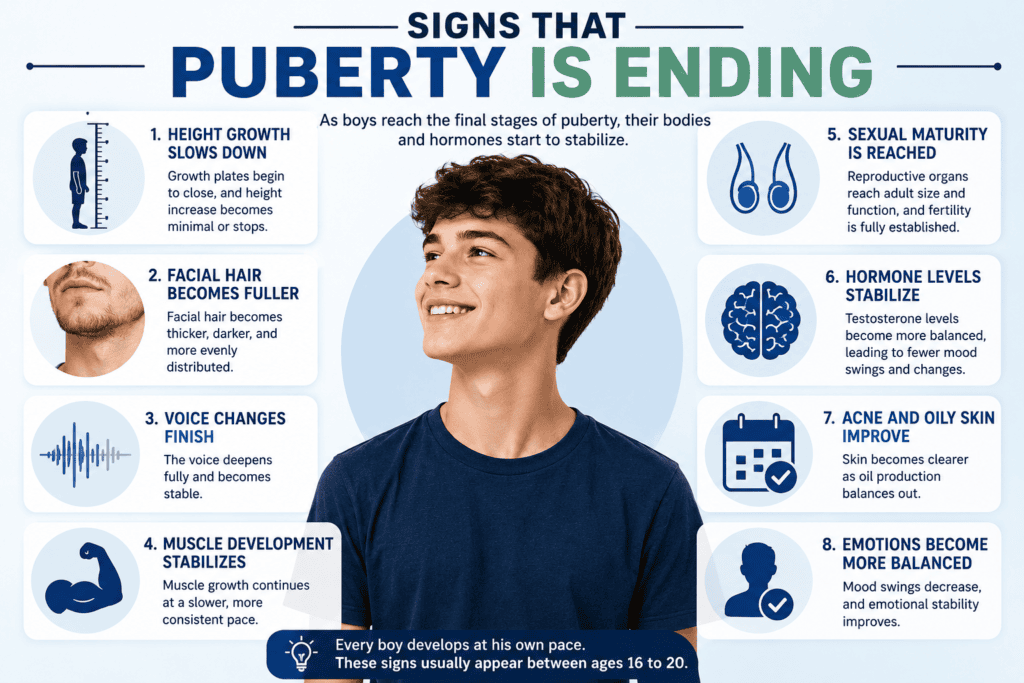
As puberty nears completion, several indicators become noticeable.
1. Height Growth Slows Down
One of the clearest signs is the slowing of height growth. During puberty, boys experience a rapid growth spurt that can add several inches per year.
When puberty ends, growth plates gradually close, and height increases become minimal or stop altogether.
2. Facial Hair Becomes Fuller
Many boys notice their facial hair becoming thicker and more evenly distributed. While some develop full beards during their teens, others continue seeing beard growth into their twenties.
3. Muscle Development Stabilizes
Testosterone helps increase muscle mass during puberty. Toward the end of puberty, muscle growth becomes more gradual rather than rapid.
4. Voice Changes Finish
The voice deepens during puberty as the larynx grows. Once puberty ends, the voice generally stabilizes and remains relatively unchanged.
5. Sexual Maturity Is Reached
Reproductive organs reach adult size and function. Hormone levels become more stable, and fertility is fully established.
Why Do Some Boys Finish Puberty Earlier Than Others?
Several factors influence the timing of puberty.
Genetics
Family history is one of the biggest factors. If parents experienced early or late puberty, their children may follow a similar pattern.
Nutrition
Proper nutrition supports healthy growth and development. Boys with balanced diets often experience normal puberty progression.
Overall Health
Certain medical conditions or hormonal disorders can affect puberty timing.
Physical Activity
Regular exercise supports healthy development, though excessive athletic training in some cases may influence growth patterns.
Emotional Changes During Puberty
Puberty is not only about physical growth. Emotional and psychological changes also occur.
Boys may experience:
- Mood swings
- Increased independence
- Greater self-awareness
- Attraction and romantic interests
- Changes in confidence levels
These emotional developments often continue even after physical puberty appears complete.
Can Puberty Continue Into the Early Twenties?
Yes. Although most major changes are finished by age 18, some boys continue maturing physically into their early twenties.
This may include:
- Additional muscle development
- Facial hair thickening
- Slight increases in height
- Continued brain development
Research suggests that parts of the brain responsible for decision-making and emotional control continue developing well beyond adolescence.
When Should Parents Be Concerned?
Puberty timing varies, but certain situations may warrant medical evaluation.
Delayed Puberty
A doctor should be consulted if:
- No signs of puberty appear by age 14
- Testicular growth has not begun
- Growth remains significantly behind peers
Early Puberty
Medical advice may also be helpful if puberty begins before age 9.
A healthcare professional can determine whether development is within a normal range or if further investigation is needed.
Common Myths About Male Puberty
Myth 1: Puberty Ends at Exactly 18
There is no universal age when puberty ends. Development varies from person to person.
Myth 2: Height Stops Growing Immediately After Puberty
Some boys continue growing slightly after most puberty changes are complete.
Myth 3: Facial Hair Fully Develops During the Teen Years
Many men continue developing thicker facial hair into their twenties.
Myth 4: Everyone Develops at the Same Rate
Puberty is highly individual. Comparing development with friends often creates unnecessary concern.
Tips for Healthy Development During Puberty
To support healthy growth, boys should:
- Eat a balanced diet rich in protein, fruits, and vegetables
- Get enough sleep each night
- Stay physically active
- Drink plenty of water
- Manage stress effectively
- Attend regular health checkups
These habits can help ensure optimal physical and emotional development.
Conclusion
So, when does puberty end for boys? Most boys complete the major stages of puberty between the ages of 16 and 18, although some aspects of development can continue until 20 or 21 years old. Puberty is a gradual process influenced by genetics, health, nutrition, and hormones.
Signs that puberty is ending include slowed height growth, stable voice changes, mature muscle development, and fully developed reproductive organs. Since every boy develops at a different pace, variations in timing are usually normal.
Understanding the stages of puberty can help boys and parents navigate this important phase with confidence and realistic expectations.
FAQ
When does puberty end for boys completely?
Most boys finish major puberty changes by ages 16–18, but some physical maturation can continue until age 21.
When does puberty end for boys on average?
Most boys finish puberty between ages 16 and 18, although some physical development can continue until age 21.
Can boys still grow taller after puberty?
Some boys may gain a small amount of height after the main stages of puberty, especially if growth plates have not fully closed.
What is the average age puberty ends in boys?
The average age is around 17 to 18 years, though it varies among individuals.
Is it normal for puberty to last five years?
Yes. Puberty commonly lasts between 2 and 5 years, and sometimes longer.
Can facial hair continue growing after puberty?
Yes. Facial hair often becomes thicker and fuller throughout the late teens and twenties.